
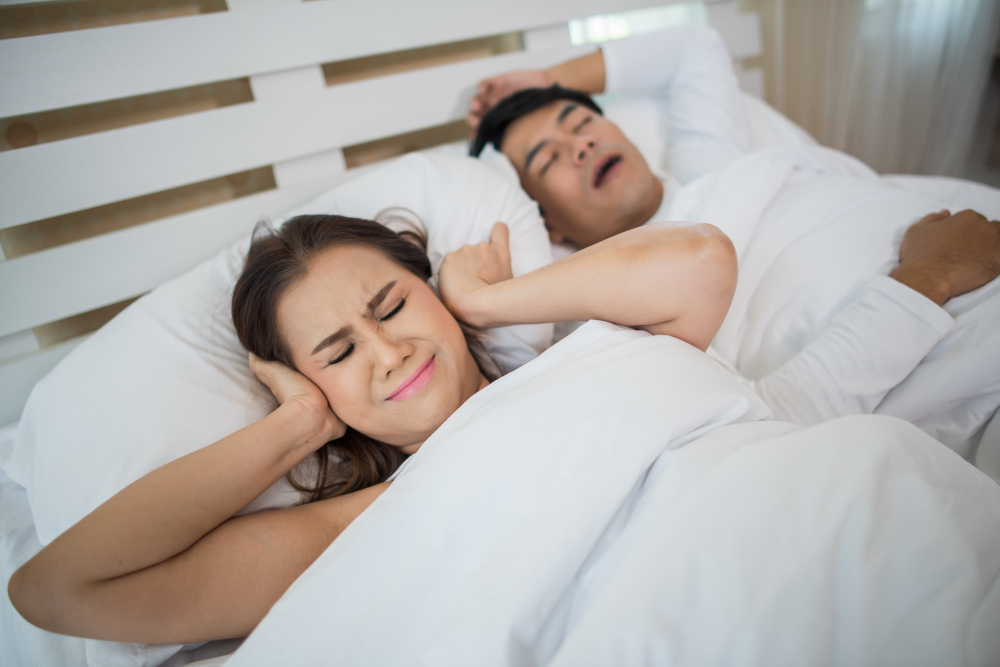
10 Signs You Might Have Sleep Apnea
Obstructive sleep apnea (OSA) affects an estimated 30 million Americans — yet more than 80% of cases remain undiagnosed. Because apnea events occur during sleep, many patients have no idea that their airway is collapsing repeatedly throughout the night, robbing them of restorative deep sleep and placing chronic physiological stress on their cardiovascular and metabolic systems. At The Center for Sinus, Allergy, & Sleep Wellness in Boynton Beach, FL, Dr. David C. Brodner — double Board-Certified in Otolaryngology and Sleep Medicine — provides comprehensive sleep apnea evaluation and personalized treatment for patients throughout South Florida.
Frequently Asked Questions About Sleep Apnea Symptoms
What is obstructive sleep apnea?
Obstructive sleep apnea is a condition in which the soft tissues of the throat repeatedly collapse during sleep, physically blocking airflow for ten seconds or longer at a time. Each episode causes blood oxygen levels to drop, triggering a brief micro-arousal that partially wakes the patient — often without their awareness — to restore throat muscle tone and reopen the airway. This cycle can repeat five to hundreds of times per hour, fragmenting sleep architecture and preventing restorative deep sleep. According to research published in the Journal of Clinical Sleep Medicine, untreated OSA is independently associated with hypertension, heart disease, stroke, type 2 diabetes, and significantly increased mortality risk.
What are the most common signs of sleep apnea?
The ten most common warning signs of obstructive sleep apnea include: (1) loud, disruptive snoring — often the first symptom noticed by a bed partner; (2) witnessed apneas — a bed partner observing you stop breathing during sleep; (3) waking with a gasping or choking sensation; (4) excessive daytime sleepiness despite adequate time in bed; (5) waking feeling unrefreshed after what should have been a full night’s sleep; (6) morning headaches; (7) difficulty concentrating or memory problems during the day; (8) mood changes, irritability, or depression; (9) frequent nighttime urination; and (10) high blood pressure, particularly when difficult to control with medications.
Does everyone with sleep apnea snore?
Not necessarily — but virtually all patients with obstructive sleep apnea do snore, and loud habitual snoring is one of the most reliable warning signs of OSA. However, not everyone who snores has sleep apnea. Snoring can result from nasal obstruction, soft palate anatomy, or other structural factors that do not involve apnea events. A sleep study is the definitive tool for determining whether snoring represents sleep apnea or a simpler snoring pattern. At The Center for Sinus, Allergy, & Sleep Wellness, Dr. Brodner evaluates every snoring patient for sleep apnea before recommending treatment.
Can sleep apnea cause daytime fatigue even if I think I slept enough?
Yes — this is one of the most important and frequently overlooked consequences of undiagnosed sleep apnea. Because apnea events cause repeated micro-arousals throughout the night, they prevent the brain from completing the deep, restorative sleep stages needed for physical and cognitive recovery. Patients with OSA often report sleeping eight hours yet waking exhausted — and experiencing chronic fatigue, difficulty concentrating, and impaired performance throughout the day. If you are consistently tired despite what appears to be adequate sleep, sleep apnea should be on the differential.
Can sleep apnea cause high blood pressure?
Yes, and the relationship is clinically well-established. Each apnea event triggers a surge of sympathetic nervous system activation — the “fight or flight” response — that temporarily spikes heart rate and blood pressure. Repeated nightly over months and years, this chronic activation produces persistent hypertension. Research consistently shows that OSA is one of the most common secondary causes of treatment-resistant high blood pressure. The American Heart Association recognizes the connection between untreated OSA and cardiovascular disease as clinically important and recommends screening high-risk patients.
How is sleep apnea diagnosed?
Sleep apnea is diagnosed through a sleep study — either a full overnight polysomnogram performed in a sleep lab or a home sleep apnea test (HSAT) for appropriate patients. Dr. Brodner at The Center for Sinus, Allergy, & Sleep Wellness performs a comprehensive physical examination — including flexible fiberoptic endoscopy to visualize the throat and identify sites of airway obstruction — before ordering a sleep study. He personally reviews each patient’s sleep study and uses the results to design an individualized treatment plan.
Is sleep apnea more common in men or women?
OSA is significantly more prevalent in men than women — estimated to affect approximately 8% of men and 4% of women in the general population. However, women’s OSA is frequently underdiagnosed because it often presents differently: rather than the classic loud snoring and daytime sleepiness seen in men, women with OSA more commonly report insomnia, depression, headaches, and fatigue — symptoms that are frequently attributed to other causes. After menopause, women’s OSA risk rises substantially, approaching that of men.
What are the treatment options for sleep apnea in Boynton Beach, FL?
Treatment is tailored to the severity of OSA and the patient’s anatomy. Options at The Center for Sinus, Allergy, & Sleep Wellness include CPAP therapy (the most effective non-surgical treatment), oral appliance therapy for mild to moderate OSA, eXciteOSA® tongue muscle therapy, and a range of minimally invasive and surgical procedures targeting the specific anatomical cause of airway collapse. Dr. Brodner’s dual board certification in Sleep Medicine and Otolaryngology means every patient receives a treatment plan that addresses both the sleep physiology and the airway anatomy driving their OSA.
Get Evaluated for Sleep Apnea in Boynton Beach, FL
If you recognize yourself in any of these warning signs — particularly loud snoring, witnessed breathing pauses, or waking exhausted despite adequate sleep — do not wait to seek evaluation. Untreated sleep apnea is a serious health risk, and effective treatment is available. Call The Center for Sinus, Allergy, & Sleep Wellness at (561) 735-8750 or request an appointment online today.
Medically reviewed by David C. Brodner, MD, Double Board-Certified Otolaryngologist and Sleep Medicine Specialist, The Center for Sinus, Allergy, & Sleep Wellness, Boynton Beach, FL.