Can’t Tolerate CPAP? Your Sleep Apnea Treatment Options Explained
CPAP (Continuous Positive Airway Pressure) therapy is the most effective non-surgical treatment for obstructive sleep apnea — but it is also one of the most commonly abandoned therapies in medicine. Studies suggest that 30 to 50% of patients prescribed CPAP are not using it consistently within the first year. If you are among those who have tried CPAP and struggled with the mask, the noise, the pressure, or the discomfort — you are not alone, and you are not out of options. At The Center for Sinus, Allergy, & Sleep Wellness in Boynton Beach, FL, Dr. David C. Brodner — double Board-Certified in Otolaryngology and Sleep Medicine — offers a full range of CPAP alternatives tailored to each patient’s anatomy and OSA severity.
Frequently Asked Questions About CPAP Alternatives
Why do so many people struggle with CPAP?
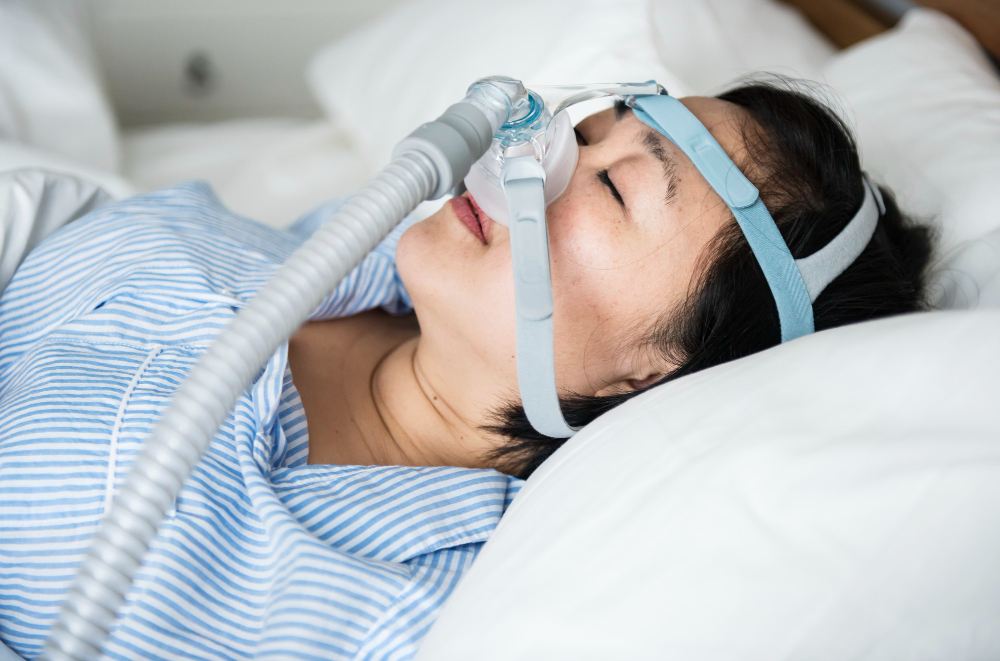
CPAP requires wearing a mask over the nose or face throughout every night of sleep — an adjustment that many patients find uncomfortable, claustrophobic, or disruptive to their sleep. Common complaints include: mask leak causing noise and air blowing into the eyes; difficulty exhaling against the continuous pressure; nasal dryness or congestion from the airflow; skin irritation or pressure marks from the mask interface; and difficulty sleeping in certain positions with the tubing. CPAP compliance studies published in Annals of the American Thoracic Society consistently show that machine use falls off significantly within months of initiation without active support. This is why Dr. Brodner runs a monthly CPAP Support Group at The Center for Sinus, Allergy, & Sleep Wellness — to help patients troubleshoot, find the right equipment, and stay compliant.
Does nasal congestion make CPAP harder to use?
Absolutely. Nasal obstruction is one of the most significant barriers to successful CPAP use. When the nasal airway is congested or blocked — from allergies, a deviated septum, enlarged turbinates, or chronic rhinitis — breathing through the nose against CPAP pressure becomes extremely difficult or impossible, forcing patients to breathe through their mouth and often causing or worsening mask leak. Treating the underlying nasal obstruction — through Vivaer® Nasal Airway Remodeling, Coblation® Turbinate Reduction, or allergy management — can dramatically improve CPAP tolerance and compliance for many patients.
What is oral appliance therapy for sleep apnea?
A custom-fitted oral appliance (mandibular advancement device) is a dental device worn during sleep that repositions the lower jaw and tongue forward, preventing the tongue and soft tissues from collapsing into the airway. Oral appliances are approved by the American Academy of Sleep Medicine as an effective treatment for mild to moderate obstructive sleep apnea and for patients with severe OSA who cannot tolerate CPAP. They are less effective than CPAP for severe OSA but significantly more comfortable and easier to use for many patients — resulting in higher nightly compliance. Dr. Brodner evaluates jaw anatomy and OSA severity to determine whether oral appliance therapy is an appropriate alternative for each patient.
What is eXciteOSA® and how does it help sleep apnea?
eXciteOSA® is an FDA-cleared prescription device that delivers neuromuscular electrical stimulation to the tongue during 20-minute daytime sessions — while you are awake. By repeatedly stimulating and strengthening the tongue muscles, eXciteOSA® reduces the muscle laxity that allows the tongue to fall back and collapse the airway during sleep, which is the primary mechanical driver of both snoring and obstructive sleep apnea. Clinical studies show statistically significant improvements in both snoring and apnea severity with regular use. eXciteOSA® is a strong option for patients with mild to moderate OSA who want a non-device sleep therapy — meaning nothing is worn during sleep — and who are willing to commit to daily daytime sessions.
What surgical options are available for sleep apnea?
Surgery is generally considered when both CPAP and oral appliance therapy have been tried and either failed or are not tolerated. At The Center for Sinus, Allergy, & Sleep Wellness, Dr. Brodner is experienced in multi-level surgical approaches that target the specific anatomical sites of airway collapse identified during his comprehensive evaluation. Options include UvuloPalatoPharyngoPlasty (UPPP) — which removes excess soft palate tissue and is successful in stopping snoring in 90 to 95% of cases using Dr. Brodner’s refined technique with PEAK low-heat technology — tongue reduction using low-heat radiofrequency for patients with macroglossia, and nasal procedures including septoplasty, turbinate reduction, and polyp removal to optimize nasal airflow. Dr. Brodner uses the Friedman staging system combined with advanced multi-level surgical planning to achieve superior outcomes compared to single-site procedures.
What lifestyle changes can improve sleep apnea without CPAP?
Lifestyle modifications can reduce OSA severity — particularly for patients with mild to moderate disease — though they are rarely sufficient as standalone treatments for significant OSA. Weight loss is the most impactful: reducing body weight by 10 to 20% can meaningfully improve or, in some cases, resolve sleep apnea by reducing the fatty tissue mass narrowing the throat. Positional therapy — sleeping on the side rather than the back — reduces the gravitational pull of the tongue and soft palate into the airway and can halve apnea event frequency in position-dependent OSA. Avoiding alcohol and sedating medications within several hours of bedtime is also important, as both significantly increase throat muscle relaxation and worsen airway collapse.
How do I find out which CPAP alternative is right for me?
The right alternative depends on the severity of your OSA, the specific anatomy driving your airway collapse, your lifestyle and preferences, and prior treatment history. A consultation with Dr. Brodner at The Center for Sinus, Allergy, & Sleep Wellness is the essential first step. His dual board certification in Sleep Medicine and Otolaryngology means he evaluates every patient from both a sleep physiology perspective and a surgical ENT perspective simultaneously — ensuring that the anatomical and physiological contributors to your sleep apnea are both identified and addressed in your treatment plan.
Explore Your CPAP Alternatives in Boynton Beach, FL
If CPAP has not worked for you, do not give up on treating your sleep apnea — giving up on treatment means giving up on your long-term health. The Center for Sinus, Allergy, & Sleep Wellness offers the full range of proven sleep apnea treatment alternatives, delivered by one of South Florida’s most experienced and uniquely qualified sleep medicine specialists. Call (561) 735-8750 or request an appointment online today.
Medically reviewed by David C. Brodner, MD, Double Board-Certified Otolaryngologist and Sleep Medicine Specialist, The Center for Sinus, Allergy, & Sleep Wellness, Boynton Beach, FL.